

Building healthy teams
In late 2025 and into spring 2026, I’d finally seen enough inside my own small organization to know something had to change. Our internal teams weren’t running efficiently. The lanes were blurry, and nobody was quite sure who owned what. People were guessing, working twice as hard, and our clients weren’t getting our best anymore.
It kept circling two things healthy cultures rest on: clear roles and real trust.
So, we rebuilt. And the whole time, I kept seeing our story in the data. Fervor was part of a small cohort that helped shape the Barna Group’s new research, The State of Christian Nonprofits, a survey of 1,017 Christian nonprofit employees that showed us what’s really happening inside teams. It kept circling two things healthy cultures rest on: clear roles and real trust.
The calling is there. The design isn’t.
The good news: about 97% of staff say their gifts align with their role.
The hard news: nearly 1 in 4 say their role is unsustainable, and that climbs to 29% in senior leadership. Asked why, staff described “doing the work of three separate people” and a culture where everything is urgent. That’s not a motivation problem. It’s a design problem. As Barna puts it, the sector isn’t struggling to attract the right people. It’s struggling to build roles that can hold them.

Only 35% of organizations regularly invest in role clarity and job design. We pray with our people. We just don’t always tell them what winning looks like.
Clarity is a kindness.
Back in September, I hosted a webinar with my buddy Tim Foot with the Slingshot Group, author of Reaching for Remarkable (Lucid Books, April 7, 2026). Tim named a trap ministries fall into all the time: hiring for compatibility over capability. We hire people we already love, then bolt on responsibilities until the role becomes a junk drawer. His fix is simple. Give every role a one-line job description. If you can’t write it, you haven’t designed the role yet.
That’s exactly what we did in our rebuild. Our account management role had drifted into “the glue between vision and execution,” which is a lovely phrase and a terrible job description. We rebuilt it as a high-trust, consultative seat: shape the client’s thinking, not just manage the work. Project tracking moved into a shared system and out of one person’s head. The role got smaller on paper and bigger in impact.
Trust grows where people feel safe to speak.
Clarity tells people where the lines are. Trust lets them work across those lines without fear. Only 57% of staff feel very supported by their manager, and comfort giving honest feedback drops among frontline staff and as organizations grow.
That matters, because 46% report burnout or overload even as 78% call their culture healthy. Both can be true. A warm culture can still be a quiet one, where people nod in the meeting and carry the strain home.
Tim offered a line I keep coming back to: healthy friction attacks the problem; unhealthy friction attacks the person. Healthy teams aren’t conflict-free. They’re safe enough to argue about the work.
Unity is strategy.
Jesus prayed that his followers would be one “so that the world may believe that you have sent me” (John 17:21). Unity wasn’t a soft value to him. It was the witness.
What’s missing is what I call row capacity.
Barna found only 16% of staff say their departments function as a unified team, while 42% describe teams as mostly separate or fragmented. What’s missing is what I call row capacity. When three people each bring a strength of two, you’d expect a total of six. But when they truly row together, in sync and pulling in the same direction, they produce something closer to 10. Fragmented teams never get that multiplier.
From where I sit, when internal teams are unclear, external audiences feel it. Nearly every messaging problem we’re called into has a team problem underneath it.
Three steps to start Monday
- Write the one-liner. For every role, including yours, write one sentence on what it’s for.
- Name what someone can stop doing. Role clarity is subtraction as much as definition.
- Ask a trust question, then wait. In your next team meeting, ask, “What’s one thing that’s harder than it needs to be?” Then listen.
Jesus said, “Whoever can be trusted with very little can also be trusted with much…” (Luke 16:10). Clear roles and real trust are how we steward the people God has already entrusted to us. Get those right, and culture stops being something we describe and becomes something we live.
###
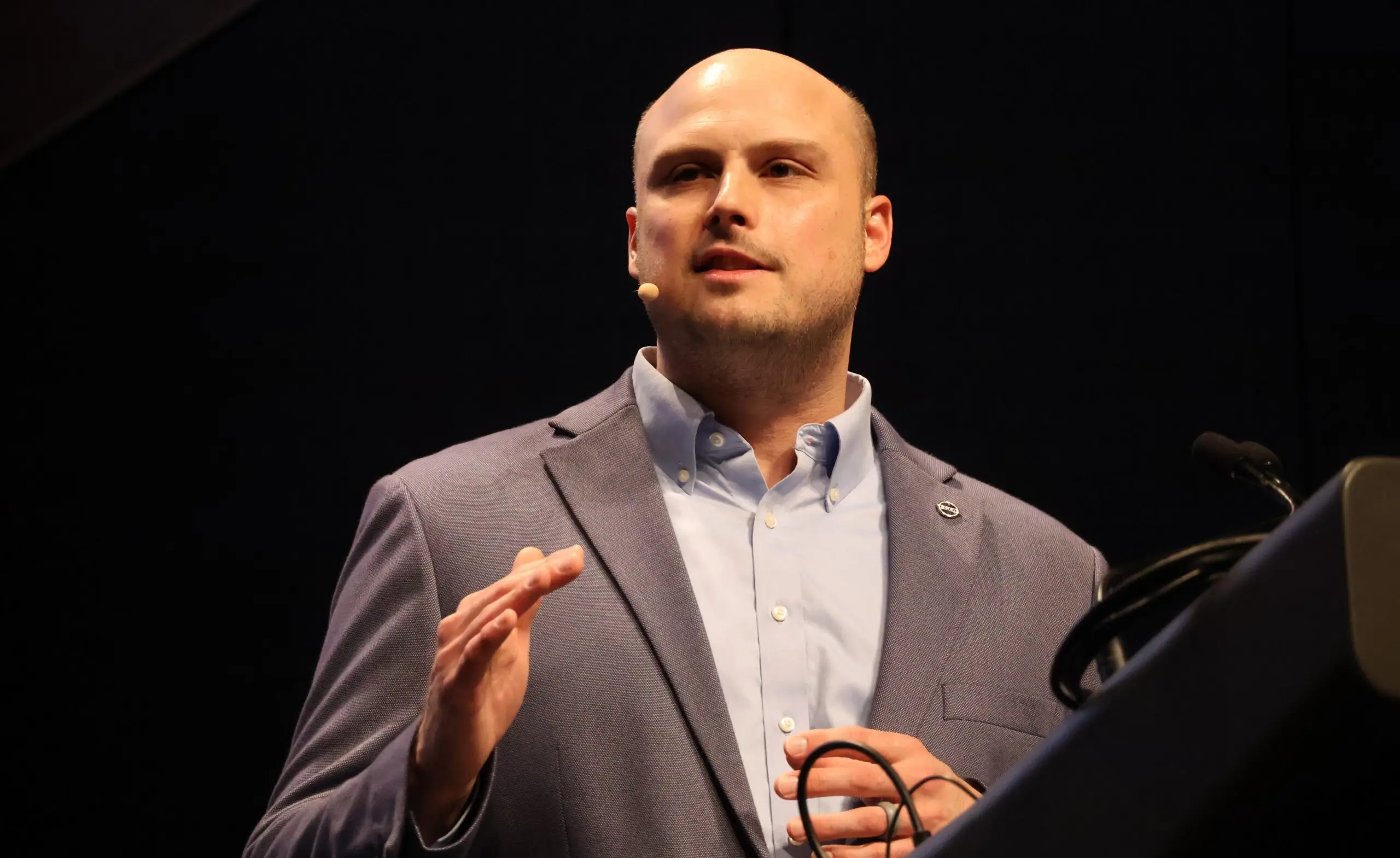
Mike Farag is CEO and chief strategy officer of Fervor, a Kansas City agency that helps faith-led nonprofits clarify their message, align their teams and grow their impact. Since 2009, Fervor has served nearly 1,000 organizations. Mike is the author of Marketing with Fervor (F9 Consulting, LLC, March 6, 2025). Connect at createfervor.com or mike@createfervor.com.
Outcomes Conference: Mike Farag will lead a workshop entitled “Clear Roles, Real Trust: Healthy Teams” at The Outcomes Conference 2027, April 6-8 in Jacksonville. Register Here >>

Featured Articles
Stewarding a Culture of Trust
Nov 20, 2026

Building Culture the NASA Way
Nov 20, 2026

Revive Your Ministry Culture
Nov 20, 2026
