
Outcomes Magazine
Talking Leadership
Stewarding a Culture of Trust
By Christian Leadership Alliance
Back to listing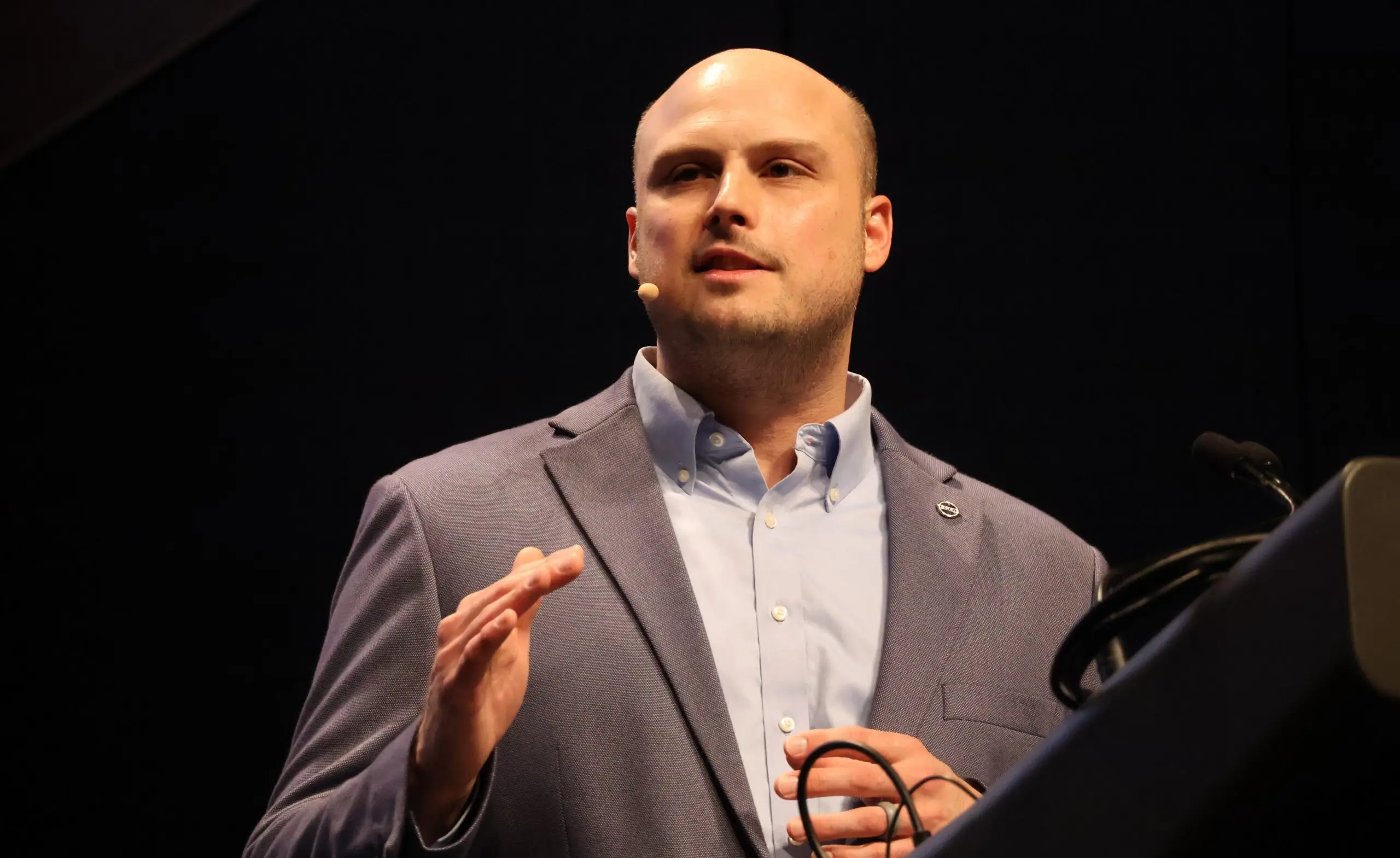
ECFA’s Michael Martin offers insight into trust and organizational culture.
Christian Leadership Alliance President and CEO Tami Heim, recently interviewed Michael Martin, J.D., CPA, President and CEO of ECFA.
This edition of Outcomes explores the theme “Culture,” asking how we can create healthy, thriving cultures that reflect Christ well to internal teams and external stakeholders. In this interview, we explore the importance of building a culture of trust. This is a topic close to the hearts of Michael Martin and the ECFA team, composed of experienced Christ-followers, passionate about strengthening trust in churches and ministries.
Michael Martin has served as president and CEO of ECFA since 2020. He has served the ministry in a variety of roles since 2011. He is passionate about helping churches and ministries flourish as trustworthy stewards to advance the gospel.
He uses his training as an attorney and CPA to contribute to ECFA’s many practical educational resources, including books, webinars, videos, podcasts, and more.
Michael holds a Juris Doctor, J.D., from Regent University School of Law, and a B.A. from Oral Roberts University.

1. Our theme is “Culture.” Can you share your heart for helping ministries create cultures of trust?
One of the most painful things we can experience in life is broken trust. And that pain is only magnified when trust is broken among believers.
But the corollary is also true: One of the most precious things we steward as Christian leaders is trust.
But underlying all of these is the stewardship of trust.
We often think about stewardship in terms of finances, people, and other resources. But underlying all of these is the stewardship of trust. It is essential not only to effective leadership and generosity, but also to the credibility of our gospel witness.
This conviction was central to ECFA’s founding nearly 50 years ago and continues to drive our mission of strengthening trustworthy stewardship in churches and ministries.
The Apostle Paul emphasized this responsibility in his letters to the Corinthians: “It is required of stewards that one be found trustworthy” (1 Cor. 4:2, NASB). Later, discussing the collection for believers in Jerusalem, he stressed the importance of avoiding criticism and doing what is right “not only in the eyes of the Lord but also in the eyes of man” (2 Cor. 8:20–21).
Organizations move at the speed of trust, as leadership author Stephen M. R. Covey reminds us. I believe our gospel witness is affected in much the same way. Broken trust can create barriers, while trustworthy stewardship can help remove them and accelerate the spread of the gospel.
That’s what motivates the ECFA team every day to help churches and ministries build cultures of trust, both internally and externally.
2. What undermines a culture of trust?
Such a great question! This is fresh on my mind after recently attending a Global Trust Partners gathering in Nairobi, Kenya. More than 50 leaders from 24 nations came together around the theme of “Trust and Rebuilding Trust,” united by a commitment to strengthening trustworthy stewardship worldwide.
One of our sessions was led by Vanessa Hall, an Australian author of The Ultimate Truth About Trust. Vanessa describes how trust is shaped by three things: our needs, expectations, and the promises others make. Trust can break down when those promises don’t align with what others need or expect, or when they aren’t fulfilled.
This brings me to what I believe is one of the greatest enemies of a culture of trust: pride. Scripture warns us about it, and I’ve seen its effects through our work at ECFA. If we aren’t humble enough to genuinely understand others’ needs and expectations, how can we faithfully steward their trust?
That’s why at ECFA, our team culture begins with “Humble”—the first of our three H’s: Humble, Hardworking, and Healthy. We all need that constant reminder. As James 4:6 reminds us, “God opposes the proud but shows favor to the humble.”
3. How does applying ECFA’s Seven Standards of Responsible Stewardship™ transform an organization’s culture?
Credibility and confidence. That’s how Dr. Ted Engstrom of World Vision International, a pioneer of CLA and ECFA’s first board chair, envisioned the transformational impact that ECFA’s standards would have on churches and ministries.
One of my favorite parts of serving at ECFA is witnessing that transformation firsthand.
One of my favorite parts of serving at ECFA is witnessing that transformation firsthand. I love coming alongside organizations applying for membership and coaching them to meet the standards—whether it’s completing their first audit, strengthening board governance, or developing a leader care plan.
In a world where mistrust is rampant, biblical standards help ground our stewardship practices in God’s truth. And belonging to an accountability community like ECFA provides the encouragement and support to keep those standards high. Because if we’re honest, we always have room to grow, and none of us ever truly “arrives” on the journey of trustworthy stewardship.
As these practices take root, confidence grows internally among leaders and staff, while donors and other stakeholders see greater evidence of credibility and integrity.
The ripple effect can extend far beyond the organization. Greater trust can encourage generosity, directing more resources to kingdom work. Ultimately, that’s our prayer: that as churches and ministries faithfully steward all God has entrusted to them, God is glorified and the gospel advances. Talk about transformation!
4. What is the board’s role in creating and upholding a culture of trust?
We tend to think it’s the leader’s job to create and uphold a culture of trust because they are the most visible and involved in the day-to-day operations.
But the board’s role cannot be overstated. Ultimately, boards are stewards of the mission, not simply guardians of legal and financial compliance.
As the commentary to ECFA’s governance standard reminds us, governance is not management. Boards and management operate at different altitudes, but they should act as partners in creating and upholding a culture of trust.
This begins with selecting the right senior leader and maintaining a strong relationship with that leader. An engaged board protects the mission, provides oversight, asks difficult questions, and models the accountability it expects from leadership.
I especially appreciate how our commentary describes the relationship between the board and senior leader as “pivotal.” When that relationship is built on mutual trust and accountability, it helps establish the foundation for a healthy organizational culture.
And that relationship goes beyond oversight. Boards have an important responsibility not only to hold their leaders accountable, but also to proactively care for them.
5. Can you share about ECFA’s new Leader Care standard?
At its heart, our new standard reflects a simple conviction: Leader care is ministry care. Ministry leadership can be demanding and isolating. When leaders struggle, the impact reaches their families, organizations, and the people they serve.
Beginning Jan. 1, 2027, ECFA’s new Excellence in Leader Care standard requires the board (or a board-approved committee) and senior leader of each accredited organization to work together to develop a proactive care plan supporting the leader’s holistic well-being and integrity. The board or committee must review and approve that plan annually and document its approval in the minutes.
We’ve intentionally avoided a one-size-fits-all checklist. Depending on the leader’s needs, a plan might include regular prayer, meaningful rest, supportive relationships, spiritual mentoring, or attention to physical and emotional health. The goal isn’t simply to create a plan, but to put it into practice.
I love the biblical picture of Aaron and Hur holding up Moses’ arms (Exodus 17). Boards have an important responsibility not only to hold leaders accountable, but also to come alongside them with encouragement and care.
We’re grateful for CLA’s partnership in this work and have developed practical resources, including our eBook, 7 Essentials for Excellence in Leader Care, to help organizations take these important steps.
6. How does Leader Care relate to healthy organizational cultures?
Without healthy leadership, you simply can’t have a healthy organizational culture. We’ve seen it time and again working alongside thousands of churches and ministries over the years.
Without healthy leadership, you simply can’t have a healthy organizational culture.
Back to humility, we had to recognize that something important was missing from ECFA’s own standards. Beginning in 2021, our board prayerfully explored the connection between leader health, integrity, and trust. Through research and listening to ministry leaders and givers, we realized we needed to do more to encourage healthy leadership.
In fact, polling conducted with help from Barna Research found that four out of five Christian donors surveyed agreed that proactively caring for a leader’s health and holistic integrity would strengthen their trust in churches and ministries.
One important lesson we’ve learned is that leader care must be proactive rather than reactive. We shouldn’t wait for burnout or an integrity failure before taking steps to care for our leaders.
Although the new standard’s requirements focus on the senior leader, our vision is much broader. Our prayer is that as leaders thrive, they create cultures where their entire organizations can thrive—strengthening trust and ultimately advancing the gospel.
7. What are you most enthusiastic about in ECFA’s work today? How can readers learn more?
The new Leader Care Standard is one example of how ECFA continues to innovate and adapt to serve churches and ministries in a rapidly changing world.
But I’m most enthusiastic about what hasn’t changed for ECFA: the why behind our work.
The need for churches and ministries to build and maintain cultures of trust is more pressing than ever. According to Gallup’s 2026 survey, only one in three Americans has a great deal or quite a lot of confidence in the church or organized religion. This erosion of trust threatens the credibility of our gospel witness and can create barriers to the missions of the organizations we serve.
That’s why we are more committed than ever to strengthening trustworthy stewardship in churches and ministries, so that the love and good news of Jesus can reach a hurting world.
You can learn more about how ECFA serves churches and ministries through equipping, coaching, advocacy, and accreditation—and how to partner with us—at ECFA.org.
###
Outcomes Conference: ECFA team members will lead workshops entitled “Renewing the Table: Recruiting a Healthy Board” and “Latest from Capitol Hill, the Courts, and Beyond” at The Outcomes Conference 2027, April 6-8 in Jacksonville. Register Here >>

Table of Contents
- 1. Our theme is “Culture.” Can you share your heart for helping ministries create cultures of trust?
- 2. What undermines a culture of trust?
- 3. How does applying ECFA’s Seven Standards of Responsible Stewardship™ transform an organization’s culture?
- 4. What is the board’s role in creating and upholding a culture of trust?
- 5. Can you share about ECFA’s new Leader Care standard?
- 6. How does Leader Care relate to healthy organizational cultures?
- 7. What are you most enthusiastic about in ECFA’s work today? How can readers learn more?
Featured Articles
Stewarding a Culture of Trust
Nov 20, 2026

Building Culture the NASA Way
Nov 20, 2026

Revive Your Ministry Culture
Nov 20, 2026
