
Why the best ministry stories invite others into the mission.
I recently heard someone describe a powerful story from their organization and then dismiss it with a curious qualifier: “That’s not marketing. It’s truth.”
The comment was meant as a compliment to the story’s authenticity. Instead, it revealed a misconception that many nonprofit and ministry leaders still hold that storytelling and truth somehow exist in tension with one another.
Many leaders make the mistake of thinking storytelling is primarily a function of the communications department, when in reality, storytelling is a leadership responsibility. The strongest stories are not crafted in a marketing department, though they may be refined there. They are forged through conviction, demonstrated through action, and sustained through consistent service over time.
As The Salvation Army approaches 150 years of ministry in the United States, I have reflected often on what allows certain stories to endure. Some lessons are unique to our organization. Others, I believe, apply to every Christian leader seeking to engage supporters, inspire teams and advance kingdom impact.
1. Enduring stories begin with a clear purpose.
People search for meaning before they look for information. They want to know why an organization exists and whether its mission deserves their trust, prayers, time, and resources.

For The Salvation Army, our mission has remained consistent: to preach the gospel of Jesus Christ and meet human needs in his name without discrimination. That mission has provided a steady foundation through wars, economic crises, natural disasters, and cultural change. From serving soldiers during World War I and helping families during the Great Depression to responding after September 11, Hurricane Katrina and countless local disasters, The Salvation Army has continually translated that mission into practical service when people needed it most.
When a mission is clear, storytelling becomes less about promotion and more about illustration.
When a mission is clear, storytelling becomes less about promotion and more about illustration. The story is not something leaders create. It is something they reveal.
2. The most powerful stories often live within the defining moments that first expressed your mission.
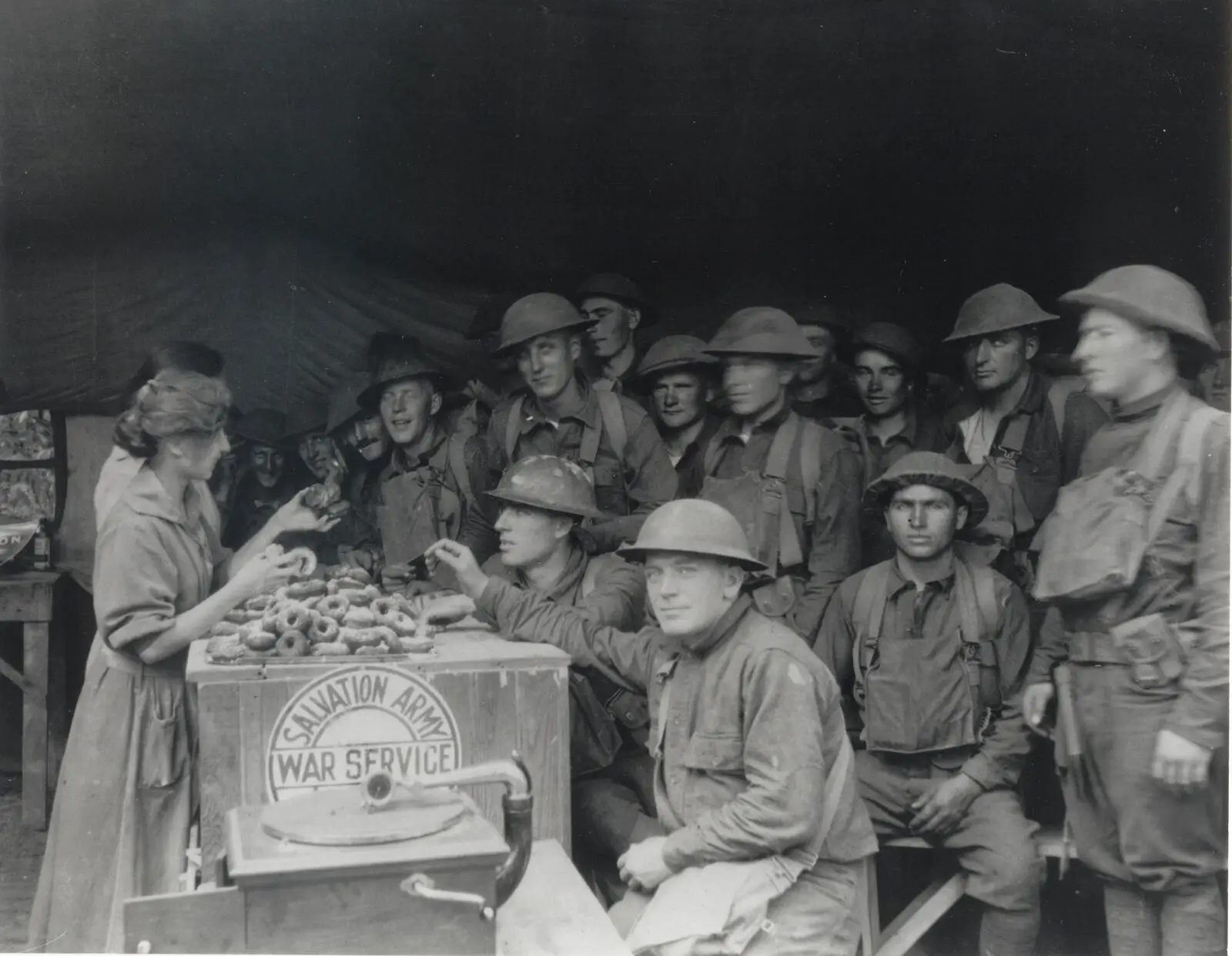
Two of the best-known stories in Salvation Army history are the Red Kettle and the Donut Lassies.
In 1891, Captain Joseph McFee sought a way to feed struggling families in San Francisco. His idea became the iconic Red Kettle, one of the most recognized charitable traditions in America.
A generation later, Salvation Army volunteers in World War I became known as the Donut Lassies. They offered soldiers donuts, spiritual encouragement, and a reminder of home.
Neither became iconic because of clever branding. They endure because they communicate something larger: meeting needs, expressing God’s love through practical service and inviting ordinary people to participate in extraordinary work.
3. Great stories create opportunities for involvement.
The most effective storytelling welcomes supporters as participants, not spectators.
Every gift, volunteer shift, and prayer becomes part of a larger narrative. Supporters are not simply hearing the story; they are helping write the next chapter.
This is especially important for Christian organizations. Throughout Scripture, God invites people into his mission rather than asking them to observe from a distance. Kingdom work always calls people to become active participants.
4. Finally, leaders must remember that mission creates stories; tools simply share them.
As Christian organizations navigate a changing communications landscape, that distinction becomes especially important when considering technology and artificial intelligence.
AI can help ministries share stories more effectively and reach audiences that might otherwise be missed. However, Christian leaders should resist letting technology become a substitute for authentic human connection.
The stories that change hearts are grounded in real people, real relationships, and real transformation
The stories that change hearts are grounded in real people, real relationships, and real transformation. No algorithm can replicate the compassion of a volunteer, the gratitude of a family finding hope, or the faithfulness of a donor who believes deeply in a mission.
Technology can help us tell stories. It cannot create the experiences that make those stories worth telling.
In the end, the best ministry stories have never been about organizations. They have always been about God working through his people.
When Christian leaders remain faithful to their mission, serve consistently and tell the truth about lives being transformed, their stories can endure across generations. In a world crowded with messages competing for attention, authentic stories remain among the most powerful tools God gives us to love our neighbors and invite others into that work.
###
Dr. Dale Bannon is the National Community Relations & Development Secretary (Director) and National Spokesperson for The Salvation Army USA. He leads national fundraising, brand awareness, and communications for The Salvation Army USA. With more than 20 years of nonprofit leadership experience, he has served in executive roles across development, operations, and community relations. He holds a doctorate in Executive Leadership and lives in Northern Virginia with his wife, Carol, and their son, Joshua.

Table of Contents
Featured Articles

A Story from the Heart
Aug 27, 2026
Storytelling That Endures
Aug 27, 2026

Structuring Successful Storytelling
Aug 27, 2026
