
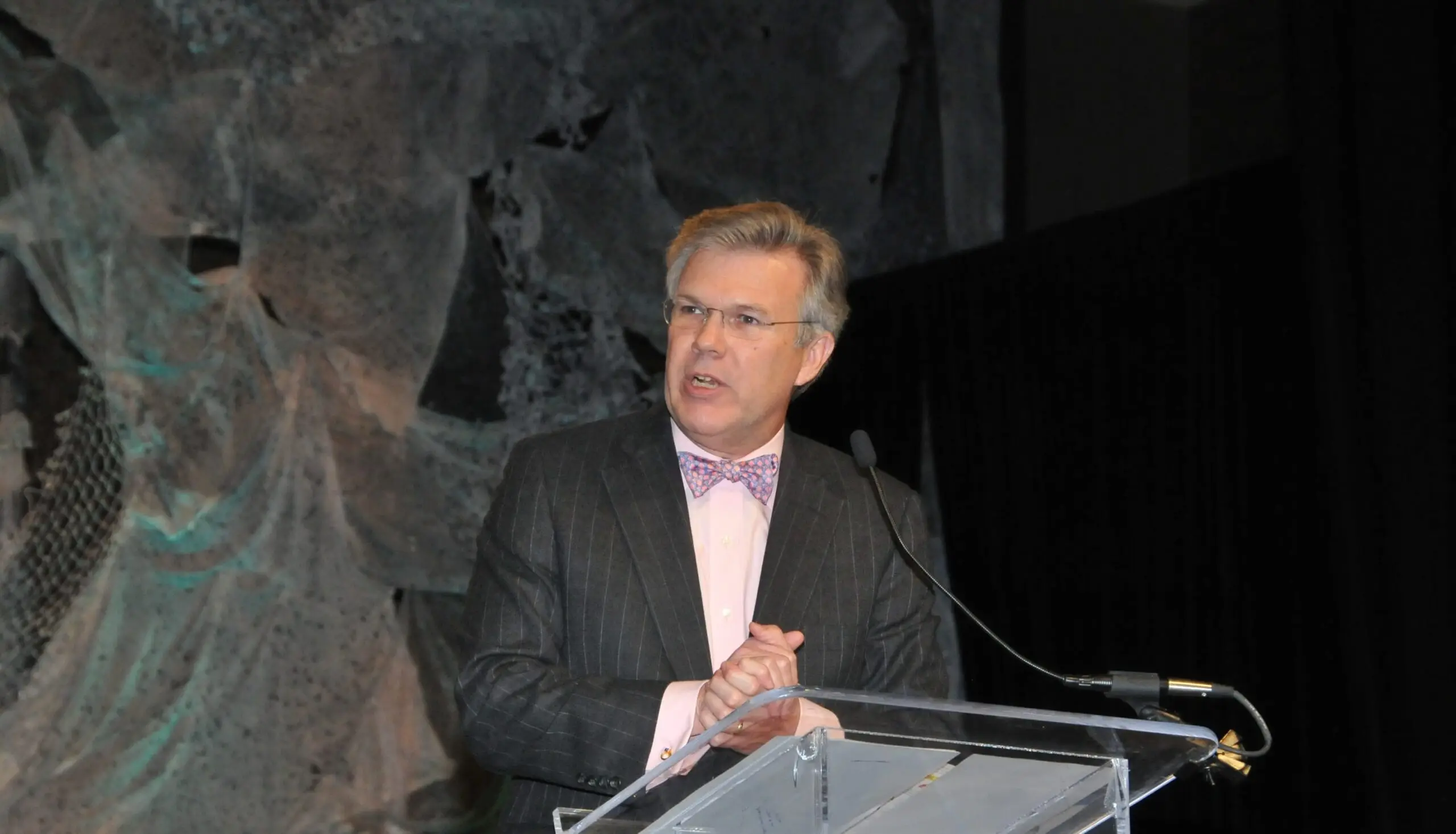
BCWI’s Al Lopus on equipping your team well
 At BCWI, Al has conducted the broadest-ever employee opinion survey of Christian workers. The comprehensive survey includes more than 1,000 Christian organizations overall, representing 300,000 full-time employees around the world.
Al is a recognized author, speaker and consultant helping Christian leaders and organizations flourish. He publishes a weekly blog highlighting a Best Christian Workplace and the Flourishing Culture Podcast featuring tips from Christian leaders on how to build a flourishing culture.
Prior to cofounding BCWI, Al served for 21 years in several leadership roles with the global human resource consulting firm, Willis Towers Watson. He served in key leadership roles in the Dallas office and managed the Denver and Seattle/Portland offices.
Al also has a mission heart. He is the founding Chairman of The Nicolas Fund for Education that provides an education for rural children in the Ixil highlands region of Guatemala. Al served on the Christian Leadership Alliance Board for six years, and is currently on its Advisory Board. He has served on the Board for Virginia Mason Medical Center, a 6,000-employee healthcare organization in Seattle.

What does it take to be a Certified Best Christian Workplace?
Employee responses to a confidential staff engagement survey are the basis for an organization to be certified as a Best Christian Workplace. Each employee responds to 55 questions that captures their workplace experience. Employees provide anonymous feedback on a one to five scale. To become a Certified Best Christian Workplace represents a score of 4.0 and higher.
Each Certified Best Christian Workplace has created a healthy-to-flourishing workplace culture where people love coming to work, get more done and fulfill their organization’s distinctive mission to further God’s work on earth. It’s all about improving the employee experience, what Inc. magazine calls, “the sum of all interactions an employee has with their employer… and how the employee perceives the company (organization) overall and their role in it.”
In our 17 years, roughly 50% of organizations that survey attain certified status by improving the health of their workplace culture through targeted, strategic action plans.
What are some markers on how an organization is doing in terms of equipping its staff team? How important is equipping?
One CEO may have thought he had the perfect response to this question when he said, “Why would I spend money developing our staff who might leave?” However, I like what another CEO said, “What worries me is if we don’t develop my staff and they stay!”
Equipping staff is all part of what we call “Uplifting Growth,” one of the eight distinctive drivers of a vibrant workplace culture. The clear rewards of equipping a staff are easy to spot in healthy, flourishing workplace cultures, when employees:
- regularly experience a positive relationship with their manager,
- feel supported and cared for by their manager,
- accept ongoing formal and informal feedback from their manager about their performance,
- enjoy opportunities to stretch and grow in their role,
- access practical, effective training for their role,
- have the freedom to make mistakes and learn from them, and
- receive meaningful recognition for excellent performance.
A key marker of equipping staff is the importance of leaders recognizing their people for what they do well and who they are.
Under your leadership, Tami, Christian Leadership Alliance has sustained a remarkable five-year run as a flourishing Certified Best Christian Workplace. You’ve done so by helping your staff aspire to the “Six Measures of Leadership” you shared with me on our Flourishing Culture Podcast:
1. Lead with Integrity
“Integrity is that far deeper quality on the inside of a person that reveals and confirms how he or she operates on the outside.”
2. Set Clear Expectations
“It’s so central, and sometimes sorely missed by leaders who believe expectations are obvious. Each new hire and staffing change mean a reset with clear expectations. Doing so lays the foundation for another true measure of leadership that naturally follows.
3. Develop Strong Trust
“Trust is the currency that measures and pays off rich meaningful working relationships. Sometimes, misguided actions and misspoken words can weaken trust between people. Even so, the true worth of trust can never be undervalued. Trust increases your ability to safely address and effectively resolve conflict.”
4. Be Accountable
“Our leadership team at CLA aims be clear with each other about our projects and how we work. Better ongoing communication is our goal, and it has made us accountable to ourselves, our direct reports, and each other. Plus, our mutual appreciation soared.
5. Build Commitment
“The late Zig Ziglar believed that one of the foundation stones for organizational success is loyalty, commitment lived out. I find increased capability and promise in people who have experienced both success and failure. True commitment is forged between both potential outcomes.”
6. Acknowledge Great Outcomes
“To acknowledge a great achievement is to savor what I like to call ‘leadership’s secret sauce’, believing and giving thanks for the best in each other.”
Equipping your staff with Christ-like character can be life-changing beyond the workplace. Kelly Jones, Chief Operating Officer for Apartment Life that served families in over a million housing units last years in the U.S., told me this story:
“Five years ago, we were struggling to increase the number of apartment communities that we served. Last year, through a lot of hard work, I’m excited to say that we had a record growth year, increasing the number of communities we serve by 25%. In the process, everyone owned his and her development and combined their skills and experience to work together and accomplish so much more than we could ever have achieved alone.
Last summer, one of our teams was helping a family move into a local Dallas apartment in midst of scorching summer heat. They introduced themselves, offered cold bottled water, and invited them into community. Several weeks later, the wife told our team, ‘When you met us, our marriage was hanging by a thread. You befriended us. You invited us into a larger church community—and you helped save our marriage.’”
BCWI has been evaluating Christian workplaces for 17 years now, what encouraging trends have you’ve seen during this time?
Several trends have emerged:
- Improved Workplace Cultures! Over the past eight years, the overall health of the Christian workplaces we’ve surveyed has increased from 3.95 (“critical moment”) to 4.07 (“clearly healthy”). Our goal is to see Christian organizations flourish at 4.25, and we are motivated to help organizations achieve that level. We are excited to see these improvements, even as the number of employees invited to survey has increased 60%.
- Staff engagement among Millennials is strong. Unlike what we hear from secular news, the engagement levels of younger workers (aged 18 to 29) is higher than those aged 30 to 55, and they are rapidly becoming the largest group in the workforce.
- Perhaps, most significantly, the influential driver we call “Inspirational Leadership” is trending upward with leaders, teams and organizations who increasingly value and seek a deeper inner life in, and deepening journey with, Christ. As Ruth Haley Barton, Founding President and CEO of The Transforming Center says: ‘We’ve got to pay attention to what’s going on in our own soul. Most of us enter into leadership believing it’s our gifts, skills, and competencies and training that other people are looking for. While all of these are important, the most important thing we bring to leadership is our own personal, transforming self. Whatever is changing or transforming to the glory of God will find its way to the edges of our organization. But here’s the sobering flip side: Whatever is dysfunctional and untransformed within us will also find its way to the edges of our organization and eventually affect everything. You will wind up bringing pain and deformation to the culture and thus the organization instead of the life of Christ.”
What challenge facing Christian leaders can’t be ignored, particularly when a healthy workplace culture and organizational impact is at stake?
When it comes to building a healthy-to-flourishing workplace culture that leads to organizational impact, Christian leaders must continually increase their leadership competencies. To this end, I like what Peter Greer, president of HOPE International, has done with his team to develop their “5-C Model of a Healthy Staff:”
- Christ – knowing and abiding in God
- Community – living in supportive and accountable community
- Character – demonstrating integrity
- Calling – knowing and presenting God’s purpose for one’s life with credibility, clarity and passion
- Competencies – attaining the necessary gifts, skill and knowledge to lead people in accomplishing God’s purposes through HOPE International
What key encouragement would you share with Christian leaders on creating a work environment that retains top-notch talent?
There are three non-negotiables, and BCWI’s Senior Engagement and Talent Consultant, Tara VanderSande spells them out:
1. Establish a robust hiring process for every role.
“Establishing a robust hiring process for every role ensures fantastic fits, builds trust and increases diversity. Every human is prone to bias selection. A consistent process demonstrates to all your staff that the organization’s values and needs come before your own. Structured interviews, multiple observation, and creative conversations will decrease your bias and increase the likelihood of greater diversity and landing outstanding talent.”
2. Create a culture of accountability to build talent sustainability.
“Accountability is simply defined as having responsibility for fulfilling your personal and professional commitments. High performing teams understand their individual and collective responsibilities and how they align to the organization’s goals. Without shared expectations, recognition is arbitrary and biased. Recognizing and rewarding pre-defined behaviors and outcomes will encourage the pursuit of excellence and builds trust within the team.”
3. Investing in people development will ensure your organization will exist in the future.
“Investing in people doesn’t require large monetary sums, additional staff or extravagant programs. In its most simple form, investment means providing your staff with opportunities for growth and greater levels of responsibility and influence. By providing clear definitions of success and explaining rewards and responsibility for accomplishments along the way, your leadership pipeline will have a solid bench from which to deploy leaders as needed.”
###
To learn more visit the Best Christian Workplaces Institute at www.bcwinstitute.org.

Table of Contents
- What does it take to be a Certified Best Christian Workplace?
- What are some markers on how an organization is doing in terms of equipping its staff team? How important is equipping?
- BCWI has been evaluating Christian workplaces for 17 years now, what encouraging trends have you’ve seen during this time?
- What challenge facing Christian leaders can’t be ignored, particularly when a healthy workplace culture and organizational impact is at stake?
- What key encouragement would you share with Christian leaders on creating a work environment that retains top-notch talent?
Featured Articles

A Story from the Heart
Aug 27, 2026

Storytelling That Endures
Aug 27, 2026

Structuring Successful Storytelling
Aug 27, 2026
