
AI Peril #2: Diminished Critical Thinking and Your Brain By Alec Hill
Back to Blog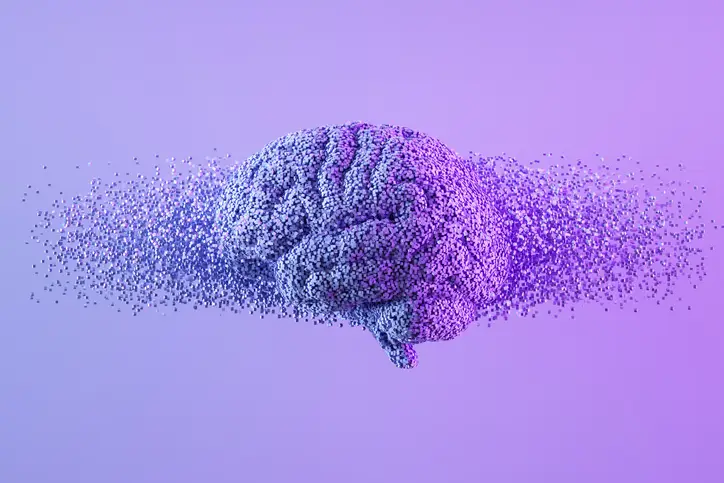
Know What’s Happening to Your Brain
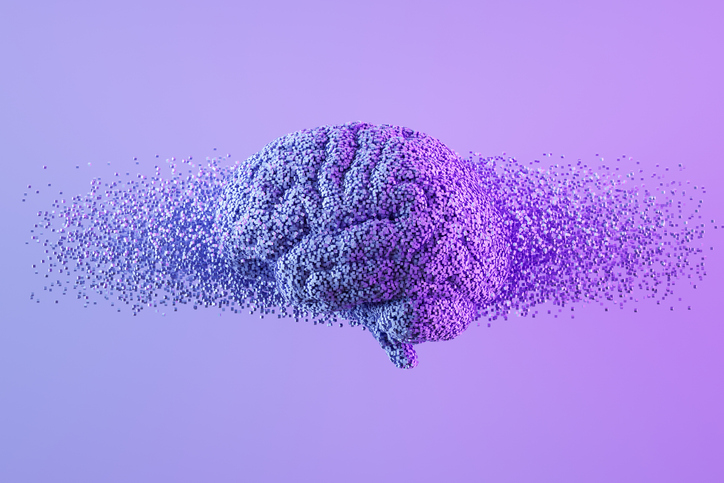
Researchers at the Massachusetts Institute of Technology (MIT) recently conducted a study measuring the brain activity of young adults as they drafted a short essay. Some used ChatGPT, while others wrote without any tech assistance.
The result? By a wide margin, the brains of the AI-aided group fired less and exhibited significantly reduced neural activity. In other words, their brains were not working as hard as their peers’.
In addition, their essays mostly sounded alike, creating a bland homogeneity of expression. One reader found their writing to be “soulless.” This contrasted sharply with their brain-only counterparts, who presented a much wider range of ideas, illustrations, and creativity.
As a follow-up, participants were asked to write additional essays. Increasingly, the AI-aided group utilized the copy-and-paste function. Four out of five could not recall what they had written just a few moments earlier. By contrast, the brain-only group demonstrated higher levels of memory and ownership.
The Truth About Your Brain
The brain is like a muscle. Without regular exercise, it atrophies. Once it gets used to offloading thinking, it is a hard habit to kick. As our brains get lazy, they learn to take the easiest path by default. Struggling makes our minds stronger.
A Yale professor laments a comment made by a recent graduate who said that it was no longer necessary for her to learn how to write – AI would take care of that. Bemoans the professor:
“What we stand to lose is not just a skill but a mode of being: the pleasure of invention, the felt life of the mind at work. Will the wide-scale adoption of AI produce a flattening of thought, where there was once the electricity of creativity?
MIT researchers coined the term “cognitive debt” to explain the short-term versus long-term tradeoffs of AI. The immediate satisfaction we get from taking the shorter route is overshadowed by the price we pay in diminished critical thinking and creativity.
Is AI putting us at risk – ala Esau in the Old Testament – of exchanging our God-given birthright of deep thought for a technological happy meal?
Three Implications
Young kids should be shielded from AI learning tools.
The MIT study concludes: “he results raise concerns about the long-term educational implications (of reliance on chatbots) … It would be detrimental for use with younger children… Developing brains are at the highest risk.”
It’s interesting to note that while only two of ten school-district heads believe that AI is a threat to students’ cognitive abilities, six in ten high-school students think it is. Let’s listen to the kids on this one.
AI can help us learn, but only in the correct sequence.
Participants who first wrote essays on their own and then used AI to improve their drafts learned more. In other words, if we engage our brains sufficiently in the initial phase, AI can be helpful.
But how many of us have the discipline to take this approach? Sadly, it is far too easy to cut corners. Making this two-step pathway even more difficult is the design of chatbots, which require us to actively resist their offer of assistance. When deadlines loom (as they so often do), it is challenging to consciously opt out.
Researchers at Emory University have proposed that chatbots be rewired to ask users probing questions, rather than simply providing answers. But, again, most of us prefer not to play a cat-and-mouse game with our computers (labeled “cognitive forcing”). Rather, we want straight lines to solutions.
AI may lead to societal regression.
If tomorrow’s teachers, business leaders, politicians, and doctors rely too much on AI today, will they be deficient in independent thinking and wisdom when they assume leadership positions?
We should be chary about becoming overdependent on machines. Where will they lead us? We don’t know yet. Outsourcing thinking is a dangerous gamble.
Final Thoughts
The bottom line is that our Creator has endowed us with marvelous brains. We must not allow them to become second-rate. Rather, let us love Him with the totality of our minds (Mat. 22:37), not permitting them to be squeezed into AI’s mold (Romans 12:2).
Alec Hill is President Emeritus of InterVarsity Christian Fellowship USA. This essay is adapted from the forthcoming fourth edition of his book Just Business: Christian Ethics in the Marketplace (IVP).
Now read the first of this AI Peril Series: Flattering Chatbots.
Join us September 1 – October 31, 2026, as we gather, grow, and learn in a worldwide community of leaders.
Become A CLA member and enjoy access to member exclusives and discounted rates!

Table of Contents
- Know What's Happening to Your Brain
- The Truth About Your Brain
- Three Implications
- Young kids should be shielded from AI learning tools.
- AI can help us learn, but only in the correct sequence.
- AI may lead to societal regression.
- Final Thoughts
- Join us September 1 - October 31, 2026, as we gather, grow, and learn in a worldwide community of leaders.
- Become A CLA member and enjoy access to member exclusives and discounted rates!

Featured Articles



CLA Membership
Join Christian
Leadership Alliance
A commitment to membership unlocks a more comprehensive access to content, community, and experiential learning. Here are the three membership exclusives that exist to significantly accelerate your professional growth and personal development.
Membership Exclusives

Alliance Community
Collaborate with peers to share strategic advice, solve challenges, and develop new approaches. Safe, secure and available 24/7!

Outcomes Academy Online
Home of the CLA Center for Online Learning, discover professional development that includes 10-week facilitated cohorts, high impact self-paced courses and short form on-demand inspirational content.

Credential Christian Nonprofit Leader Program (CCNL)
Enroll in the CCNL credential program and gain a proven multi-disciplinary understanding of nonprofit leadership. Earn this distinction through online courses and attending the Outcomes Conference.
